


The global travel industry is currently navigating a fundamental shift in how consumers discover, plan, and book their journeys as three of the world’s most powerful technology companies—Amazon, Meta, and Google—accelerate the development of sophisticated artificial intelligence systems designed to act as autonomous travel agents. While the promise of "agentic" travel planning—where AI models do not just suggest destinations but execute complex bookings—offers a new frontier for consumer convenience, it has simultaneously birthed a significant distribution crisis for travel executives. This emerging fragmentation means that the digital visibility of airlines, hotel chains, and online travel agencies (OTAs) is no longer portable across platforms, creating a "walled garden" effect that threatens the traditional open-web discovery model.
The Triad of AI Travel Ecosystems: Amazon, Meta, and Google
The current landscape is defined by three distinct approaches to AI-driven travel, each operating under different technical frameworks and business philosophies.
Amazon has significantly intensified its efforts by revamping its Alexa+ platform. Earlier this month, the company announced a strategic integration with Expedia, set to launch later this year. This partnership aims to transform the voice assistant from a simple information retriever into a proactive travel planner capable of managing complex itineraries through voice commands. For Amazon, the goal is "ambient intelligence," where the travel booking process becomes a background task managed within the home ecosystem.
Meta, conversely, is leveraging its massive social media footprint. With the recent release of its latest Llama AI models, Meta is building systems designed to draw data directly from its own products—Instagram, WhatsApp, and Facebook. This strategy focuses on the "inspiration-to-transaction" pipeline. By keeping the AI within its own apps, Meta ensures that a user who sees a travel reel on Instagram can transition to planning a trip without ever leaving the Meta environment.
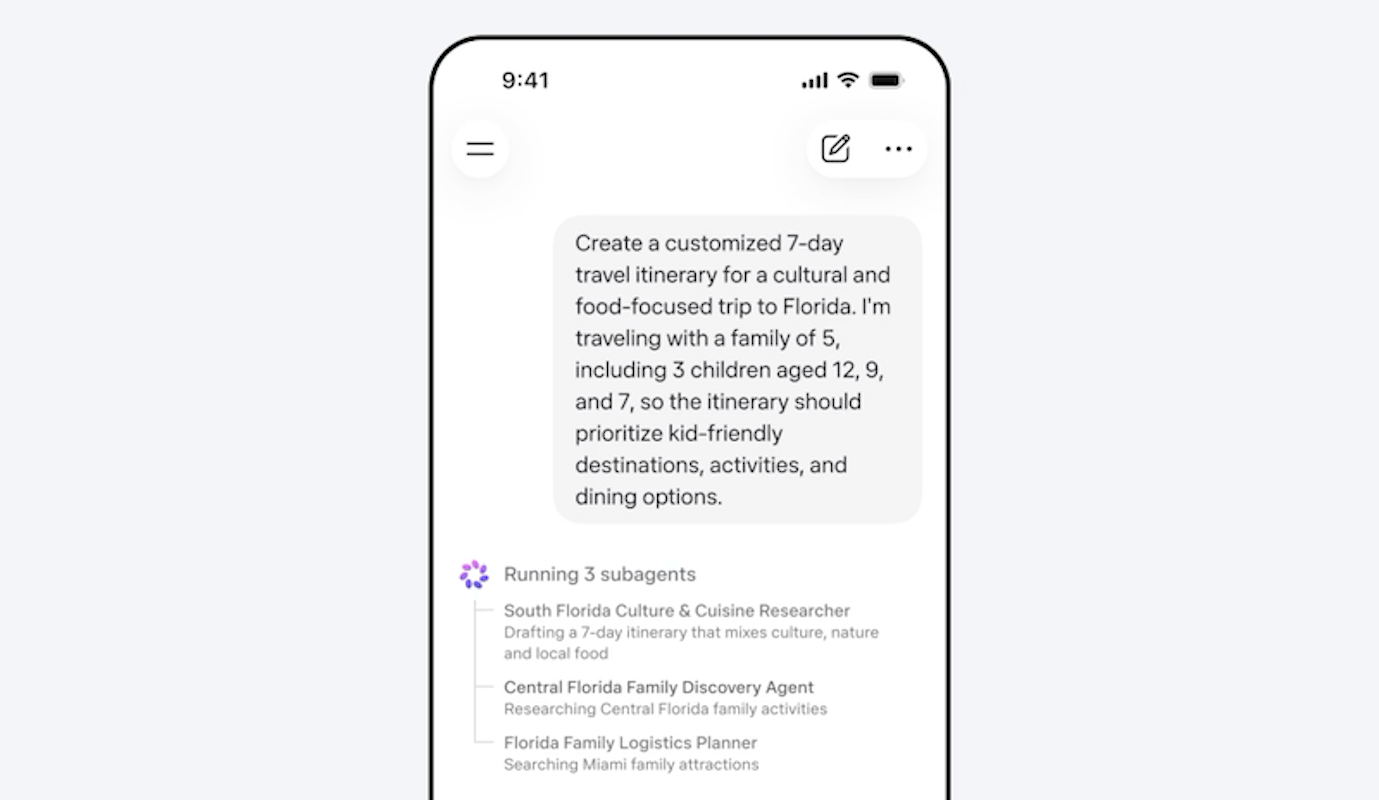
Google remains the most pervasive player, operating on two fronts. While it continues to develop "agentic" booking capabilities behind the scenes—systems that can navigate websites to book flights or hotels on a user’s behalf—it is also aggressively expanding its footprint into the Apple ecosystem. The integration of Google’s Gemini model into Siri and its role in powering live translation for iPhone users represents a strategic move to dominate the mobile travel experience, regardless of the hardware.
The Distribution Problem: Why Portability is Vanishing
For decades, the travel industry relied on a relatively unified playbook: Search Engine Optimization (SEO) and Search Engine Marketing (SEM). If a hotel or airline optimized its presence for Google, it was generally visible to the world. However, the rise of specialized AI agents has shattered this uniformity.
Travel executives are now finding that visibility in one AI environment does not guarantee presence in another. An OTA that partners exclusively with Google for AI-driven booking tools may find itself invisible during an Alexa voice interaction. Similarly, a boutique hotel chain that optimizes its content for Meta’s Llama models may not be recommended by Gemini. This fragmentation requires travel brands to build and maintain separate technical integrations for every major AI ecosystem, a task that is both capital-intensive and operationally complex.
This lack of a unified playbook means that the "cost of entry" for digital distribution is rising. Smaller players who cannot afford to develop bespoke APIs for Amazon, Meta, Google, and potentially Apple, risk being sidelined by larger conglomerates like Expedia or Booking.com, who have the resources to maintain presence across all fragmented AI "nodes."
A Chronology of the AI Travel Revolution
The transition from traditional search to AI-driven agency has occurred with remarkable speed over the last 24 months:
- November 2022: The launch of ChatGPT introduces the public to Large Language Models (LLMs), prompting travel companies to experiment with basic chatbots.
- Early 2023: Major OTAs like Expedia and Kayak launch ChatGPT plugins, attempting to bridge the gap between conversational AI and real-time booking data.
- Late 2023: Tech giants realize that "plugins" are insufficient. They begin moving toward native AI integration, where the AI model is built into the operating system or the core application.
- Mid-2024: The shift to "Agentic AI" begins. Google, Amazon, and Meta announce models that are not just conversational but "action-oriented," capable of performing tasks across the web.
- Late 2024 (Projected): The rollout of the Alexa-Expedia integration and the widespread adoption of Gemini on iOS are expected to mark the first mass-market use of AI travel agents.
Supporting Data: The Economic Stakes of AI Integration
The urgency surrounding these developments is fueled by the sheer scale of the global travel market, which is projected to reach over $2.5 trillion in annual spending by the end of the decade. According to recent industry reports, approximately 75% of travelers now use some form of mobile or digital assistance during the planning phase of their trips.
Data from recent consumer surveys indicates that nearly 40% of travelers would be willing to let an AI agent handle their entire booking process if it meant a 10% reduction in planning time. For tech giants, capturing even a small percentage of the booking fee or the advertising spend associated with these transactions represents a multi-billion-dollar opportunity.
However, the "fragmentation tax" is real. Analysts estimate that for a mid-sized travel brand, the cost of maintaining high-quality, real-time data feeds across four or five different AI ecosystems can increase their digital marketing and IT budgets by as much as 20% to 30% annually.
Industry Responses and Strategic Pivots
The reaction from the travel industry has been a mix of cautious optimism and strategic concern. Peter Kern, the former CEO of Expedia Group, has frequently emphasized that the "winner" in the AI race will be the one who provides the most seamless user experience. Expedia’s decision to partner deeply with Amazon suggests a belief that voice-activated, home-based planning is a key growth area.
Conversely, hotel groups like Marriott and Hilton have focused on enhancing their own proprietary apps to ensure they maintain a direct relationship with the consumer. Executives at these firms have expressed concerns that AI agents could become "super-intermediaries," further distancing hotels from their guests and potentially charging high "referral fees" that mirror or exceed those of traditional OTAs.
Technical experts within the industry are calling for the development of new standards. Just as the industry adopted the "Schema.org" standards for search engines, there is a growing movement to create a "Universal Travel API" that would allow travel brands to feed data into any AI model regardless of the platform. However, with Big Tech companies incentivized to keep their ecosystems closed to protect their data moats, such a standard remains a distant prospect.
Analysis of Implications: The Move from Discovery to Execution
The most profound implication of this fragmentation is the shift from "Discovery AI" to "Execution AI." In the Discovery phase, an AI might suggest, "You should visit Tuscany in October." In the Execution phase, the AI says, "I have found a flight on Lufthansa and a room at the Belmond; should I charge your saved card?"
This shift changes the nature of competition. In a traditional search world, a traveler might look at ten different hotels before choosing one. In an AI-agent world, the agent may only present one "best" option. This "zero-click" or "single-result" environment creates a winner-take-all scenario for travel brands. If you are not the AI’s top choice, you effectively do not exist for that consumer.
Furthermore, the integration of Google’s Gemini into the Apple ecosystem represents a significant blow to the idea of a "neutral" internet. As AI becomes the interface through which we interact with the web, the companies that control that interface—Apple and Google—gain unprecedented power over consumer choice. The "live translation" and "agentic booking" features powered by Gemini on the iPhone mean that Google’s data preferences will dictate the travel experiences of billions of users.
Conclusion: Navigating the New Distribution Reality
The fragmentation of the AI travel landscape is not a temporary hurdle but a permanent feature of the new digital economy. For travel executives, the "distribution problem" has evolved from a matter of search rankings to a matter of ecosystem integration.
To survive in this environment, travel brands must move beyond traditional marketing. They must become "AI-ready," ensuring their data is structured in a way that autonomous agents can ingest and act upon. They must also make difficult strategic choices about which ecosystems to prioritize, balancing the massive reach of Google and Meta against the specialized, high-intent environments of Amazon and Expedia.
As these AI systems continue to evolve in parallel, the travel industry faces a paradox: while the act of traveling is becoming more global and connected, the digital pathways to get there are becoming more divided and proprietary. The companies that successfully bridge these divides—or successfully dominate one of the major "walled gardens"—will define the next era of global tourism.