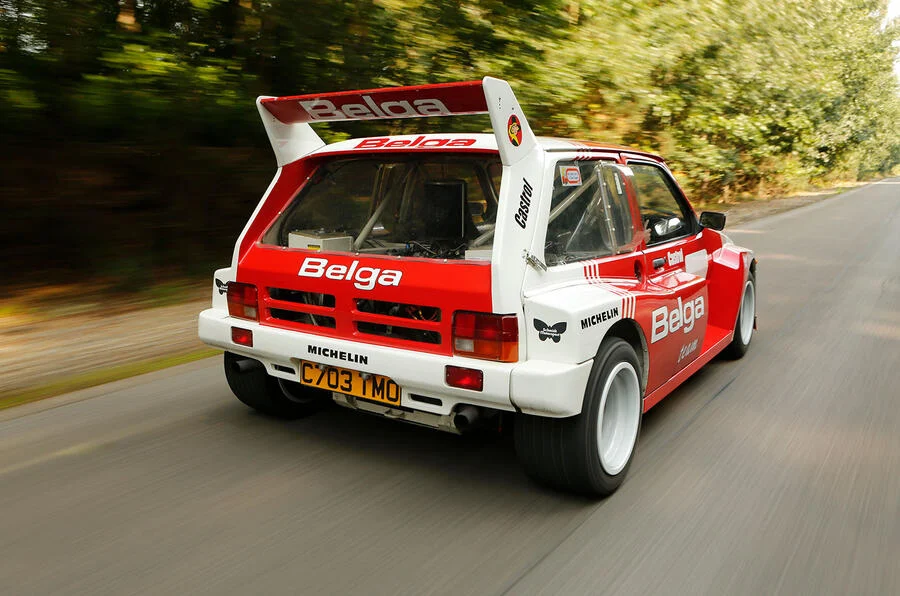
The MG Metro 6R4 remains one of the most distinctive and technically intriguing chapters in the history of international rallying, representing both the zenith of British Leyland’s competitive ambitions and the cruel volatility of the Group B era. Developed during the mid-1980s by the Austin Rover Group (ARG) in collaboration with Williams Grand Prix Engineering, the 6R4—which stood for six-cylinder, rear-engine, four-wheel drive—was designed to challenge the dominant forces of Audi, Peugeot, and Lancia. While its competitive lifespan in the World Rally Championship (WRC) was curtailed by a combination of mechanical teething issues and the eventual dissolution of the Group B category, the vehicle’s engineering DNA and aesthetic impact have secured its place as a cornerstone of automotive history.
The Genesis of the 6R4 and the Williams Partnership
The project began in 1980 when John Davenport, the head of Austin Rover Motorsport, recognized that the existing rear-wheel-drive Triumph TR7 V8 was no longer capable of competing against the burgeoning four-wheel-drive technology popularized by the Audi Quattro. Unlike many of its competitors who sought to adapt existing production platforms into rally contenders, ARG pursued a purpose-built approach. The decision was made to utilize the silhouette of the Austin Metro, the company’s popular supermini, to maximize marketing potential, but the underlying mechanical architecture was entirely bespoke.
To ensure the vehicle met the highest standards of competition engineering, ARG partnered with Williams Grand Prix Engineering. Under the technical direction of Patrick Head and designer John Wheeler, the team moved away from the traditional front-engine layout. Instead, they opted for a mid-mounted engine configuration, which optimized weight distribution and handling. This collaboration marked a rare instance where Formula 1 engineering was directly applied to the rugged, unpredictable world of stage rallying.
Technical Architecture: The V64V Engine and Naturally Aspirated Philosophy
The heart of the 6R4 was the V64V engine, a 3.0-liter, 90-degree V6 power unit featuring four valves per cylinder. At a time when the rally world was increasingly obsessed with turbocharging, the engineering team at Williams and ARG made the controversial decision to remain naturally aspirated. The rationale was centered on drivability; by avoiding the significant "turbo lag" prevalent in 1980s forced induction systems, engineers believed the 6R4 would offer superior throttle response and more predictable power delivery on technical, winding rally stages.
In its "Works" specification, the V64V engine produced approximately 410 brake horsepower (bhp) at 9,000 rpm. For the "Clubman" version—the 200 units required for FIA homologation—the engine was detuned to roughly 250 bhp to ensure a degree of reliability for privateer buyers. The engine utilized a dual-overhead-cam (DOHC) setup and was constructed with a cast aluminum block and heads, reflecting contemporary racing standards.
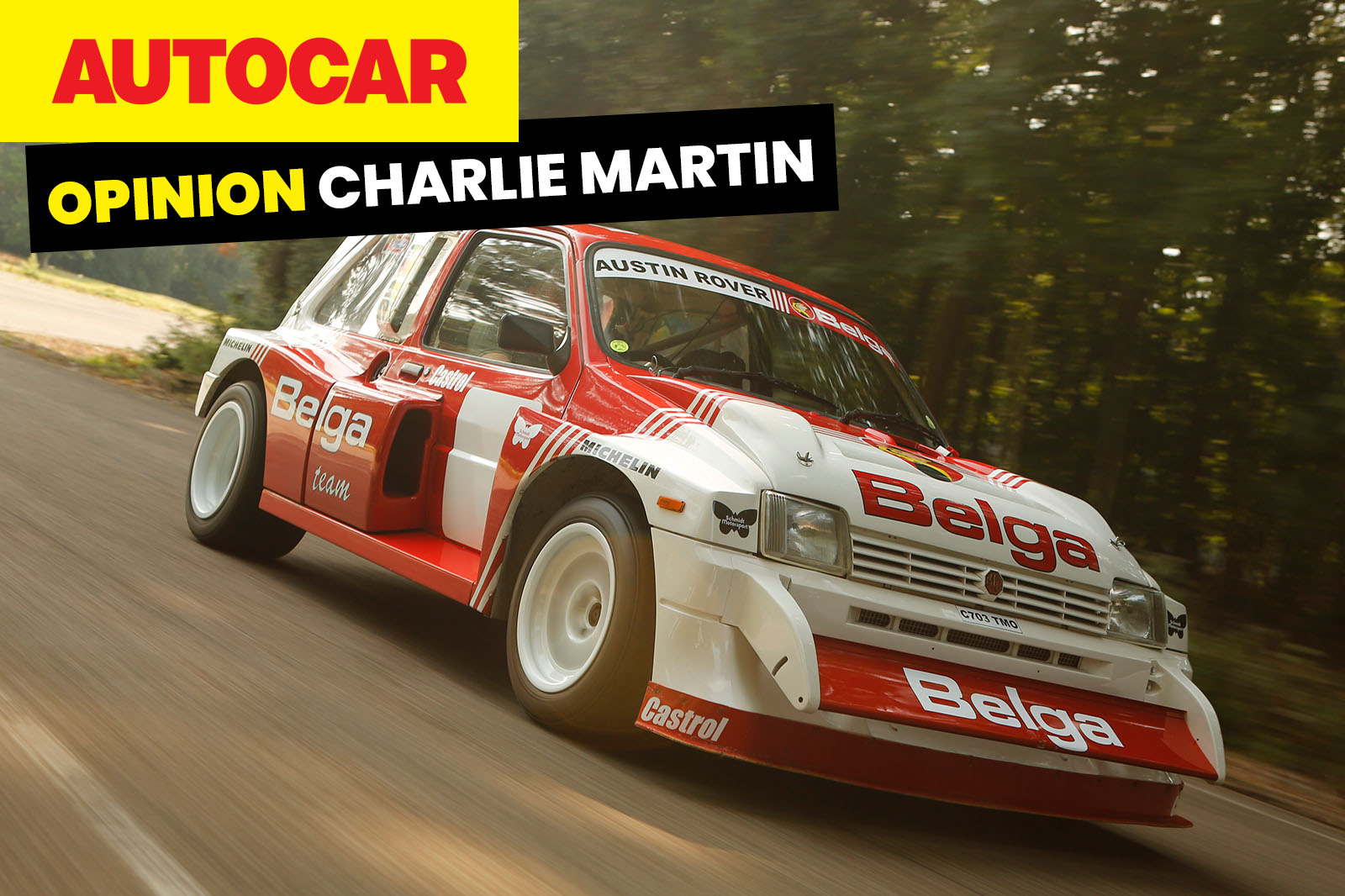
The chassis was a complex spaceframe structure, reinforced with a semi-monocoque center section. To keep weight to a minimum, the body panels were fabricated from fiberglass and Kevlar. The permanent four-wheel-drive system featured a center differential that split torque between the front and rear axles, providing the mechanical grip necessary to handle the high-revving V6 power.
Chronology of Development and Competition
The development of the 6R4 was a protracted process, spanning nearly five years from concept to its international debut. This delay would ultimately prove to be the car’s greatest disadvantage.
- 1981–1983: Initial design and prototyping. The first "mule" vehicles were tested, utilizing various engine configurations before the V64V was finalized.
- 1984: The 6R4 made its first public appearance in prototype form at the British Rally Championship. It demonstrated immediate pace but was plagued by early reliability concerns.
- 1985: Homologation was officially achieved in November after the production of 200 road-going units. The car made its WRC debut at the Lombard RAC Rally. In a stunning display of potential, driver Tony Pond took the 6R4 to a third-place podium finish, trailing only the formidable Lancia Delta S4s.
- 1986: This was intended to be the 6R4’s breakout year. However, the season was marred by mechanical failures, specifically related to the cooling system and engine valvetrain. While the car was fast, it struggled to finish events.
- May 1986: Following a series of fatal accidents involving other Group B cars in Portugal and Corsica, the FISA (now FIA) announced that Group B would be banned from international competition at the end of the year.
The ban effectively ended the 6R4’s career before its engineers could fully resolve its reliability issues or develop a rumored twin-turbocharged evolution to keep pace with the 500+ bhp outputs of the Peugeot 205 T16 and the Audi Sport Quattro S1.
Visual Identity and Marketing Impact
The 6R4 was as much a marketing tool as it was a racing machine. Its aggressive stance—characterized by massive boxy wheel arches, a prominent front "cowcatcher" spoiler, and a large rear wing—served a dual purpose. Functionally, these aerodynamic appendages provided essential downforce and cooling for the mid-mounted engine. Visually, they created an unmistakable silhouette that stood out even in the radical field of Group B.
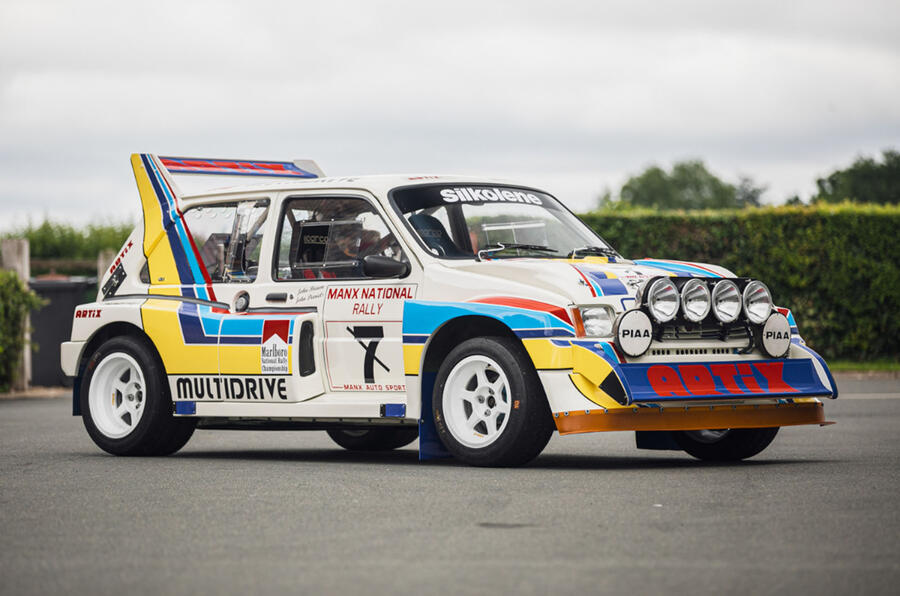
The car became a canvas for some of the most iconic liveries in motorsport history. The official factory cars were adorned in the blue and white Computervision colors, a design that became synonymous with the 6R4. Privateers further diversified the car’s appearance; notable examples included the Rothmans livery driven by Jimmy McRae and the vibrant P&O Ferries design used in rallycross. These partnerships allowed Austin Rover to maintain a high level of visibility in the public eye, despite the car’s inconsistent finishing record.
Supporting Data and Competitive Performance
An analysis of the 6R4’s performance data reveals a vehicle that was highly competitive in terms of raw speed but hampered by the era’s technological limitations. During the 1985 RAC Rally, Tony Pond’s third-place finish was achieved against a field of 153 starters. The 6R4 managed to set several fastest stage times, proving that on certain terrains, the naturally aspirated V6 could outmaneuver its turbocharged rivals.
However, the 1986 season data tells a different story. In the Monte Carlo Rally, both works cars retired due to engine problems. In the 1000 Lakes Rally in Finland, the cars again failed to reach the finish line. The naturally aspirated approach, while providing linear power, lacked the sheer torque required to compete on the high-speed gravel stages where the turbocharged 4WD cars reigned supreme. By late 1986, competitors were reportedly pushing their engines to nearly 600 bhp, leaving the 410 bhp 6R4 at a significant power-to-weight disadvantage.
Post-Group B: Life in Rallycross and the Jaguar Connection
The termination of Group B did not mark the end of the 6R4’s mechanical legacy. The car found a second, highly successful life in the European Rallycross Championship. In this arena, the short-wheelbase and agile handling of the Metro were perfectly suited to the tight, mixed-surface circuits. Drivers like Will Gollop modified the 6R4 into a "Bi-Turbo" monster, eventually producing upwards of 700 bhp. Gollop’s success, including winning the 1992 European Rallycross Championship, provided the validation of the chassis that the WRC had denied.
Furthermore, the V64V engine architecture lived on in one of the most famous supercars of the 1990s. When Tom Walkinshaw Racing (TWR) was tasked with developing the engine for the Jaguar XJ220, they utilized the 6R4’s V6 design as the foundation. With the addition of twin turbochargers, the evolved version of the Metro’s engine powered the XJ220 to a world production car speed record of 217.1 mph in 1992.
Broader Implications and Historical Analysis
The story of the MG Metro 6R4 is often cited by automotive historians as a "what if" scenario. Had the car been homologated in 1983 or 1984, it likely would have dominated the field before the second generation of turbocharged 4WD cars arrived. Its failure was not one of engineering incompetence, but of timing. The Austin Rover Group lacked the massive R&D budgets of Peugeot or Audi, leading to a development cycle that could not keep pace with the rapid escalation of Group B technology.
The 6R4 also represents the end of an era for the British motor industry. It was the last great effort by a state-owned British manufacturer to conquer the world stage of rallying. Its presence today at historic events, such as the Goodwood Festival of Speed or the Donegal Rally demo runs, continues to draw massive crowds. The visceral sound of the high-revving V6—a stark contrast to the muffled "pop and bang" of its turbocharged contemporaries—remains its most enduring sensory legacy.
In contemporary collector markets, the 6R4 has seen a significant surge in value. Genuine Works cars and well-preserved Clubman models now command prices in the hundreds of thousands of pounds, reflecting its status as a masterpiece of "extreme" engineering. While it may not have secured a WRC title, the MG Metro 6R4 succeeded in its primary mission: it became an unforgettable icon of British grit and mechanical audacity.