


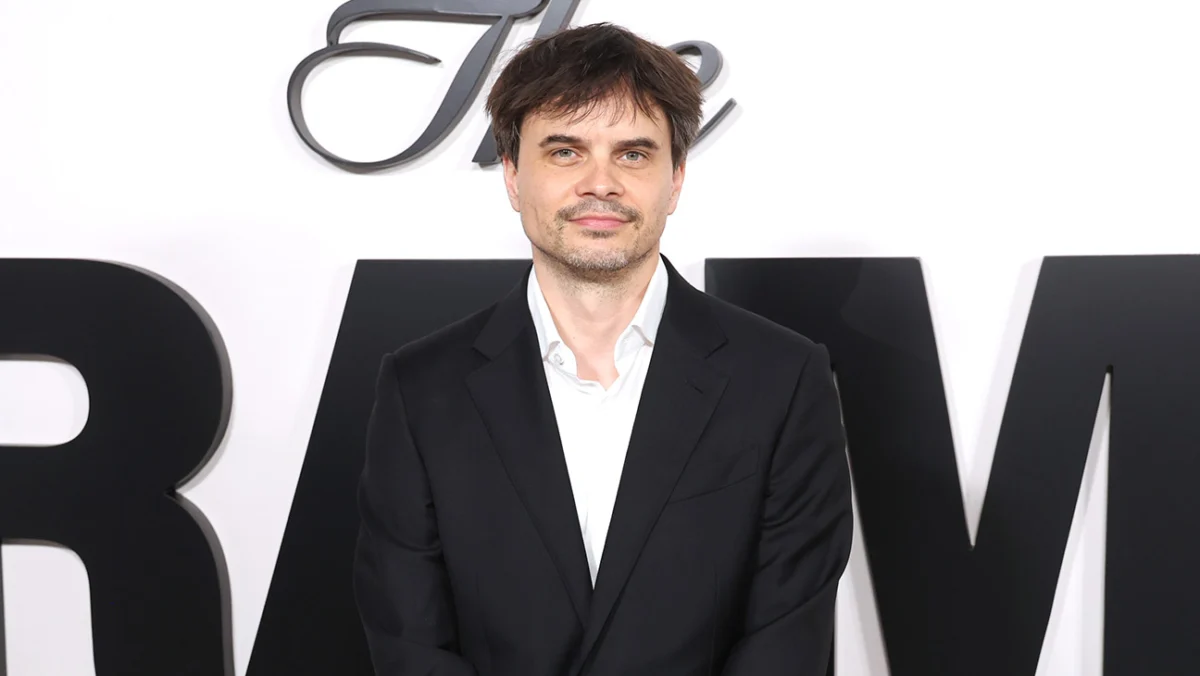
A decade-old essay penned by emerging Hollywood director Kristoffer Borgli has resurfaced, igniting a fresh wave of scrutiny just as his profile in the international film industry reaches new heights. The piece, originally published in a Norwegian magazine and now circulating widely on Reddit, delves into a past relationship Borgli had with a then-teenage girl, raising complex questions about the filmmaker’s personal history and its potential implications for his burgeoning career.
Borgli, the creative force behind the upcoming A24 production The Drama, a highly anticipated feature starring Hollywood heavyweights Zendaya and Robert Pattinson, finds himself at the center of a viral online discussion. Reddit users, particularly within the A24 enthusiast community, have shared scanned copies and translations of the 2012 essay from D2, the weekend lifestyle supplement of Dagens Naeringsliv, Norway’s preeminent financial daily. This publication is known for its in-depth cultural commentary and long-form profiles, akin to the Wall Street Journal‘s lifestyle sections.
The essay, written by Borgli at the age of 27, offers a personal reflection on a romantic involvement with a minor. The unearthed text, not readily available online prior to this resurgence, has been meticulously translated by forum members, prompting a significant public discourse. This renewed attention arrives at a pivotal moment for Borgli, marking a transition from a cult independent filmmaker to a more mainstream Hollywood figure. His latest English-language project, The Drama, follows his critically acclaimed 2023 film Dream Scenario, starring Nicolas Cage, further solidifying his trajectory. The involvement of Zendaya and Robert Pattinson in The Drama signifies a substantial elevation in his international standing and the industry’s investment in his artistic vision.
The Nature of The Drama and Borgli’s Signature Style
The Drama is described as a narrative that explores the unsettling trajectory of a couple on the brink of marriage, artfully weaving together themes of intimacy and mounting unease. This thematic approach aligns seamlessly with Borgli’s established penchant for dark comedy, a genre he navigates by embracing discomfort, challenging taboos, and employing provocation. This distinct sensibility is precisely what has drawn the attention of A24, a studio renowned for its commitment to bold, conversation-sparking, and auteur-driven cinematic projects. The studio’s track record suggests a willingness to support filmmakers who push boundaries and engage audiences on a deeper, often more challenging, intellectual and emotional level.
Navigating Societal and Legal Landscapes
While the legal age of consent in Norway is established at 16, relationships between adults and adolescents remain a subject of significant social contention within the country. It is within this complex societal landscape that Borgli’s essay delves, exploring the inherent tensions and moral ambiguities that such relationships can entail. The essay itself grapples with these issues, providing a personal framework for understanding Borgli’s perspective at the time of its writing.
A Chronology of the Controversy
The genesis of this renewed controversy can be traced back to a Reddit post, likely appearing in early 2024, where a user shared a link to scans of the D2 magazine essay. The post, titled "Throwback to that time Kristoffer Borgli dream [sic]," quickly gained traction within the r/A24 subreddit, a popular online community dedicated to the independent film studio. Over the subsequent weeks, the thread saw an exponential increase in engagement, with users contributing translations, analyses, and discussions about the essay’s content and its implications for Borgli’s career.
The essay itself provides a partial chronology of Borgli’s personal experience. He recounts meeting the girl ten years his junior in May 2012. The narrative details his initial internal conflict, his friends’ disapproval, and his subsequent decision to pursue the relationship, drawing parallels to cinematic portrayals of May-December romances, notably Woody Allen’s Manhattan. The essay concludes with the end of the summer, signaling a temporal endpoint to their intense, albeit brief, entanglement. The physical act of climbing out of a first-floor window upon the unexpected early return of the girl’s parents marks a symbolic and literal conclusion to this period of their lives.
The Content of the Essay: A Personal Reflection
The full translated text of the essay offers a candid, albeit controversial, glimpse into Borgli’s mindset at 27. He begins by referencing the prevalence of "May-December romances" in film, noting that Wikipedia lists 266 such cinematic explorations. He then explains his personal encounter with a girl ten years his junior, a situation that prompted him to "recalibrate his moral compass." His friends’ immediate condemnation ("not within bounds") only solidified his understanding of the relationship’s controversial nature.
Borgli describes waking up in a rented apartment, the girl beside him, defining her as a "high school student enjoying the sporadic holidays in May." He admits to choosing to "see her that way, to define her by her age," yet acknowledges the persistent pull of his feelings. This internal conflict is further explored through his reliance on artistic interpretations of similar relationships. He cites the dynamic between Bill Murray and Scarlett Johansson in Lost in Translation and Steve Buscemi and Thora Birch in Ghost World. However, it is Woody Allen’s Manhattan, with its depiction of a 42-year-old character’s public relationship with a 17-year-old, that significantly influences his perspective. Borgli questions why such a relationship, portrayed positively in 1979, should be deemed unacceptable in 2012, especially with a "considerably smaller age difference."
He expresses fascination with the girl’s life, contrasting her upbringing in Oslo with his own rural background. He posits that her exposure to art, literature, and film from an early age provided her with a cultural insight that he felt was delayed in his own development. He observes their intellectual parity despite their age gap, noting shared cultural touchstones and her ability to introduce him to new artistic experiences, such as Édouard Levé’s Self-Portrait.
The essay vividly portrays their time together: shared meals, intimate conversations, walks with her parents’ dog, and evenings spent in restaurants and bars where age was not a barrier. He describes spending days in her parents’ empty apartment, consuming their wine and books, engrossed in conversations and laughter. Their shared tastes in music and film, their mutual affection for Fleetwood Mac, and their peculiar attachment to peanuts are detailed, painting a picture of a surprisingly synchronous connection. Borgli concludes by stating that this summer, spent largely within the confines of her parents’ home, was "the best and most exotic summer" he had ever experienced, despite not traveling. The unexpected early return of her parents marks the abrupt end of this idyllic period.
Supporting Data and Industry Context
Kristoffer Borgli’s rise in Hollywood is not without precedent. The industry has a history of embracing filmmakers with distinct, often provocative, artistic voices. A24, in particular, has built its reputation on championing such talents. Films like Hereditary, Midsommar, and The Lighthouse are prime examples of A24’s commitment to pushing cinematic boundaries and exploring complex psychological themes. Borgli’s previous work, including the acclaimed short film Rotterdam (2018) and his feature debut Sick of Myself (2022), which garnered critical attention at the Cannes Film Festival, established him as a director with a unique ability to blend unsettling humor with profound social commentary.
Sick of Myself, for instance, explored themes of narcissism and the desperate pursuit of attention through a darkly comedic lens, earning Borgli comparisons to directors like Ruben Östlund. His ability to dissect societal anxieties and human frailties through a provocative, often uncomfortable, narrative style has been a hallmark of his emerging career. Dream Scenario, his first major Hollywood production, further showcased this talent, with Nicolas Cage playing a man who inexplicably begins appearing in other people’s dreams, leading to a surreal and thought-provoking exploration of fame, identity, and the subconscious.
The casting of Zendaya and Robert Pattinson in The Drama is a significant indicator of Borgli’s rising stock. Both actors are highly sought-after and have a history of engaging with ambitious, artistically driven projects. Zendaya’s recent work in the Dune franchise and her Emmy-winning performance in Euphoria have cemented her status as a leading talent, while Pattinson’s career trajectory, from blockbuster franchises to critically acclaimed independent films like The Lighthouse and Good Time, demonstrates a commitment to challenging roles. Their participation in The Drama suggests a confidence from both the actors and their representatives in Borgli’s directorial vision.
Official Responses and Industry Reactions
As of the reporting date, neither A24 nor representatives for Kristoffer Borgli have issued formal public statements regarding the resurfaced essay. The Hollywood Reporter has reached out to both parties for comment, indicating the industry’s awareness of the developing situation. The silence from the involved parties, while not uncommon in such sensitive matters, allows speculation and discussion to continue unabated.
However, it is reasonable to infer potential industry responses. The entertainment industry often navigates such controversies with a degree of caution. While artistic integrity and a filmmaker’s personal history are distinct, public perception can significantly impact a film’s reception and a director’s future opportunities. The focus for A24 and Borgli’s team will likely be on managing the narrative and ensuring that the focus remains on the artistic merit of The Drama. This could involve a strategy of acknowledging the essay’s existence without dwelling on its content, or a more direct engagement with the themes it raises through interviews or public statements closer to the film’s release.
Broader Impact and Implications
The resurfaced essay poses a multifaceted challenge for Kristoffer Borgli and the industry at large. On a personal level, it forces a confrontation with past reflections and decisions, particularly those that touch upon sensitive societal norms. For Borgli’s career, the situation presents a delicate balancing act. On one hand, his willingness to explore taboo subjects and provocative themes has been a key element of his artistic appeal. On the other, the specific nature of the essay, dealing with a relationship with a minor, has the potential to alienate some audiences and create negative press.
The broader implication for the film industry is the ongoing tension between artistic freedom and societal accountability. As filmmakers continue to push boundaries, the scrutiny of their personal lives and past writings becomes increasingly intense, especially in an era of instant online dissemination. The case of Borgli highlights the complex ethical considerations that arise when an artist’s personal history intersects with their public persona and their creative output. It also underscores the power of social media platforms like Reddit to unearth and amplify past controversies, forcing a re-evaluation of an individual’s public image.
The upcoming release of The Drama will undoubtedly be watched with an added layer of scrutiny. The film’s themes of unsettling relationships and moral ambiguity may now be viewed through the prism of Borgli’s personal essay, potentially coloring audience interpretation and critical reception. The success of the film, and indeed Borgli’s future projects, may depend not only on its artistic merits but also on how effectively he and his team navigate the public discourse surrounding this resurfaced element of his past. The situation serves as a stark reminder that in the contemporary media landscape, an artist’s past is never truly buried, and their ascent can be accompanied by a renewed examination of their foundational experiences.