


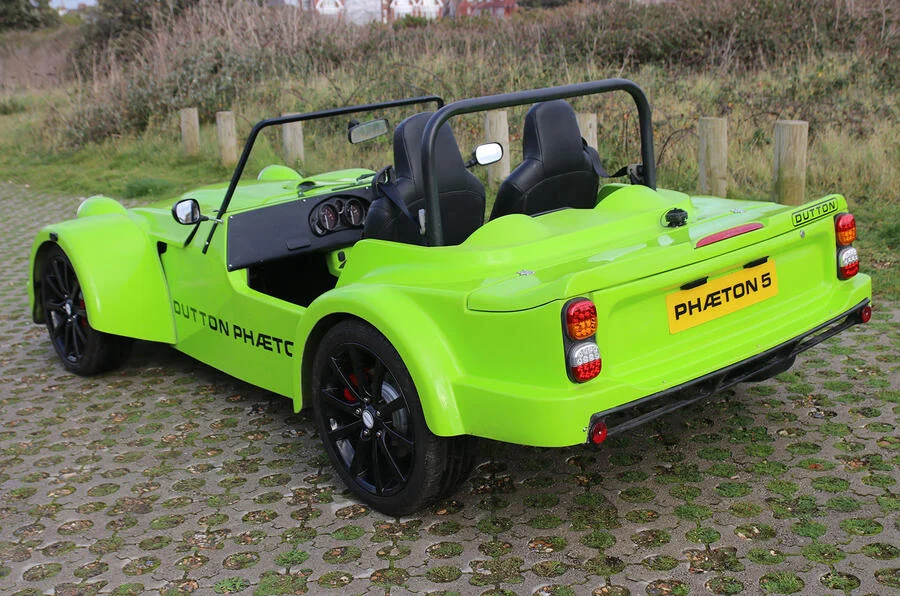
The automotive landscape has witnessed the return of one of its most prolific figures as Tim Dutton, often heralded as the "grandmaster of kit cars," officially unveiled the Phaeton 5. This launch marks a significant milestone in specialized vehicle manufacturing, representing Dutton’s first foray back into traditional kit car production in 37 years. The Phaeton 5 serves as a spiritual and technical successor to a lineage that once dominated the global kit car market, signaling a renewed interest in the "build-it-yourself" enthusiast sector.
Dutton’s return comes after a decades-long hiatus from road-only vehicles, during which he focused on amphibious transport. The new model is not merely a nostalgic reproduction but a modern re-engineering of the Phaeton concept, utilizing the third-generation Mazda MX-5 as its mechanical foundation. This strategic choice of donor vehicle reflects a broader shift in the kit car industry toward reliable, high-performance Japanese engineering as the basis for bespoke automotive projects.
The Legacy of a Kit Car Pioneer
To understand the weight of the Phaeton 5’s release, one must examine the historical footprint of the Dutton brand. Established in 1967 in a modest workshop behind a pub in Sussex, the firm grew at an unprecedented rate. Throughout the 1970s and 1980s, Dutton was the world’s largest manufacturer of kit cars by volume. Between 1967 and 1989, the company sold over 8,000 kits, maintaining an average output of approximately 363 units per year.
During this peak period, the Dutton Phaeton became a staple of the British motoring scene. The original Phaetons were celebrated for their accessibility and the relative ease with which a hobbyist could assemble a functioning sports car in a home garage. However, as the 1980s drew to a close, Tim Dutton stepped away from the traditional kit car market, citing a desire for new challenges after having saturated the niche he helped define.
The Chronology of Innovation: From Road to River and Back
The timeline of Tim Dutton’s career is a testament to persistent engineering curiosity. Following his departure from the kit car scene in 1989, Dutton took a brief sabbatical before identifying a gap in the market for recreational amphibious vehicles. In 1995, he launched a new chapter of his career, producing a series of amphibians including the Mariner, Commander, Amphijeep, Reef, and Surf.
Over the next 28 years, Dutton manufactured 282 amphibious vehicles. These machines were unique for their ability to transition seamlessly from road use to water travel, often seen navigating the River Arun near his Littlehampton headquarters. This era of his career concluded in 2023 when he sold the amphibious project to his long-term agent in Poland, a move that many observers assumed heralded his final retirement.
However, the period of leisure was short-lived. Alongside his lead engineer and right-hand man of 15 years, Jack Gorski, Dutton found the pace of retirement and simple restoration work unsatisfying. This restlessness led directly to the development of the Phaeton 5, a project designed to modernize the classic roadster formula for a contemporary audience.
Technical Specifications: The Mazda MX-5 Foundation
The Phaeton 5 distinguishes itself from its predecessors through its choice of donor components. While earlier Dutton models relied on parts from Ford Cortinas or Sierras—vehicles that are now becoming increasingly rare and expensive—the Mk5 utilizes the Mazda MX-5 (NC generation), produced between 2005 and 2015.
The choice of the NC-generation MX-5 is a calculated engineering decision. The "Hiroshima Roadster" provides a stiff chassis, a sophisticated multi-link rear suspension, and a range of reliable powerplants, including 1.8-litre and 2.0-litre engines. For the demonstrator model, Dutton utilized a 2.0-litre Tech Sport variant sourced from a salvage auction, demonstrating the project’s viability even when using damaged donor vehicles as a starting point.
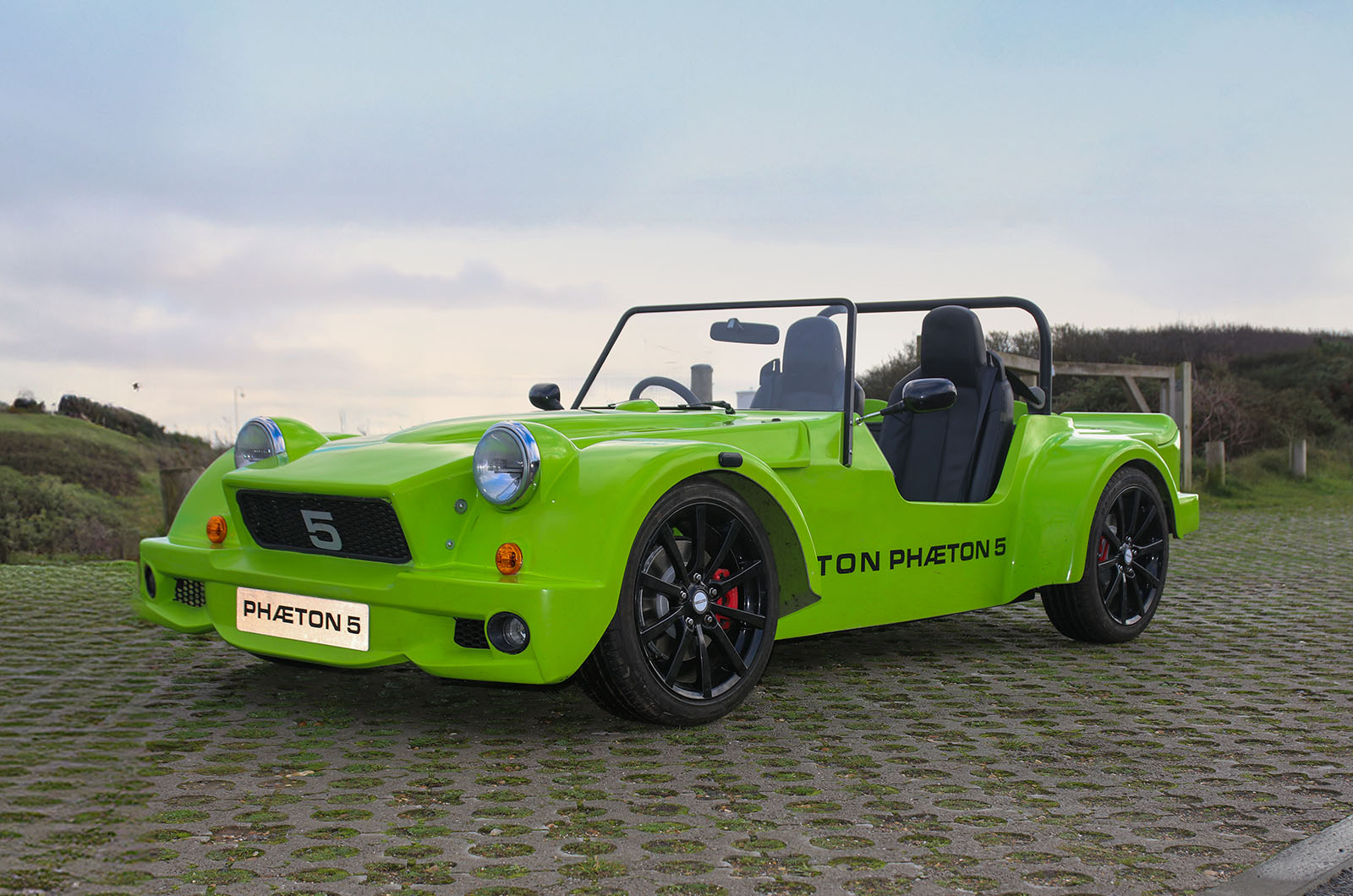
One of the most notable physical changes in the Phaeton 5 is its increased scale. Dutton and Gorski recognized that the average height and build of the modern driver have increased since the 1980s. Consequently, the Mk5 features a larger cabin and a wider footprint than the Mk4. This "upsizing" ensures that the vehicle remains comfortable for long-distance touring, moving away from the "snug" and often cramped dimensions of 20th-century kit cars.
The exterior finish of the demonstrator is another point of technical interest. While many kit cars require expensive professional painting, the Phaeton 5 utilizes a high-quality gel coat. The debut vehicle is finished in "Lamborghini Verde Scandal," a vivid green that is integrated directly into the fiberglass bodywork. This approach reduces the overall cost for the builder while providing a durable, high-gloss finish that is resistant to the chips and scratches common in road use.
Market Context and the Evolution of the Kit Car Industry
The emergence of the Phaeton 5 arrives at a transformative time for the UK’s specialist vehicle industry. The kit car market has evolved from a budget-driven alternative for those who could not afford a factory sports car into a premium hobbyist pursuit. Modern builders are often looking for a weekend project that results in a vehicle with contemporary reliability and safety standards.
By utilizing the Mazda MX-5 NC, the Phaeton 5 benefits from modern amenities such as anti-lock braking systems (ABS), airbags (where retained), and fuel-injected engines that meet modern emissions standards. This makes the vehicle more likely to pass the stringent Individual Vehicle Approval (IVA) testing required for road registration in the United Kingdom.
Industry data suggests that the pool of available donor cars is a critical factor in the success of any new kit car. With over 250,000 NC-generation MX-5s produced globally, the supply of mechanical parts is secure for the foreseeable future. This contrasts sharply with kit cars based on vintage Ford or Triumph components, where the scarcity of parts has driven up the "entry price" of the hobby.
Broader Implications and Economic Outlook
The return of the Dutton name to the kit car market is expected to stimulate interest among both veteran builders and a new generation of enthusiasts. For Tim Dutton, the project represents a rejection of traditional retirement in favor of active manufacturing. "I can’t retire. What on earth would I do?" Dutton remarked during the unveiling, emphasizing that his energy levels remain consistent with his early days in the 1960s.
From an economic perspective, the Phaeton 5 offers a sustainable model for low-volume manufacturing. By selling the car in kit form, the company bypasses the massive capital requirements of full-scale automotive production while providing work for specialized technicians like Gorski. Furthermore, the sale of the amphibious arm to Poland indicates a strategic streamlining of Dutton’s operations, allowing the Sussex team to focus exclusively on refining the Phaeton 5.
Analysts in the niche automotive sector suggest that the success of the Phaeton 5 will depend on its pricing structure relative to other MX-5 based kits, such as those offered by MEV or Tribute Automotive. However, the Dutton brand carries significant historical weight and a reputation for durability that may give it a competitive edge in a crowded market.
Conclusion: A New Chapter for a Sussex Icon
The Phaeton 5 is more than just a new car; it is a continuation of a legacy that has spanned nearly six decades. By bridging the gap between the simplistic kit cars of the 1970s and the sophisticated donor technology of the 21st century, Tim Dutton has positioned his latest creation as a viable option for the modern enthusiast.
As the vehicle enters production, it stands as a testament to the enduring appeal of the British specialist car industry. The combination of a world-renowned name, a proven Japanese mechanical platform, and a design that accounts for modern ergonomic needs suggests that the "grandmaster of kit cars" may have once again identified exactly what the market requires. Whether the Phaeton 5 will reach the 8,000-unit heights of its predecessors remains to be seen, but its arrival confirms that the spirit of independent automotive innovation in Sussex is far from retired.